

The image of a Travel Bloggers sipping coffee in a Parisian café while their laptop earns them a living is a powerful one. But behind the curated Instagram feed and scenic drone shots lies a complex business reality. The travel blogging landscape has evolved dramatically, especially as we move through 2026. It’s no longer just about documenting adventures it’s about building a sustainable digital enterprise.
So, how do modern travel bloggers turn their wanderlust into a paycheck? The answer lies in diversification: treating a blog less like a diary and more like a media company with multiple revenue streams.
The New Reality of Travel Blogging
First, a dose of reality: the barrier to entry in Travel Bloggers is low, but the barrier to success is high. The internet is saturated with travel websites. However, the opportunity is bigger than ever. The travel and tourism industry is booming, supporting hundreds of millions of jobs globally and contributing trillions to the economy . With 49% of travelers heading online for trip planning, the demand for authentic, helpful content is immense .
The Travel Bloggers who succeed in 2026 are those who combine authentic storytelling with a strategic, business-minded approach to monetization .
1. Affiliate Marketing: The Backbone of Blog Income
For most successful travel bloggers, affiliate marketing is the single largest source of income . This is a performance-based model where you earn a commission for recommending products or services . It’s popular because it’s passive: you create content once, and it can generate sales for months or years.
How it works: Bloggers place unique tracking links within their posts. When a reader clicks a link and makes a booking or purchase, the blogger earns a commission .
High-earning travel bloggers often make thousands of dollars monthly from affiliate marketing alone. Real-world examples show bloggers generating between $6,000 and $9,000 per month, with a significant portion coming from affiliate programs like Travel payouts . One blogger, Marek, earns up to $10,000 per month through his blogs and reports that affiliate links now make up over 80% of his overall income .
There are a huge number of travel affiliate programs available in 2026. The landscape has evolved from simple hotel and flight links to covering every stage of a traveler’s journey . You can promote:
-
Hotels and Accommodation: Booking.com, Expedia, and Trip.com are giants with massive inventories .
-
Flights and Transport: Programs like the Qatar Airways affiliate program offer access to thousands of bookable routes .
-
Tours and Activities: The experiences market is set to reach $300 billion, with platforms like Klook and Viator offering up to 5-12% commission .
-
Travel Insurance and Fintech: Multi-currency cards and travel insurance can pay $50-$200 per lead .
Success in affiliate marketing requires more than just dropping links. As one successful blogger learned, “people can smell desperation from a mile off” . The key is to place links naturally within genuine, helpful content where they provide clear value to the reader. If you recommend a tour you personally loved in a destination guide, an affiliate link to book that tour feels like a helpful next step, not a sales pitch.
How bloggers build trust and drive conversions
Successful travel bloggers create a strong “ecosystem of interlinked content.” For example, a blogger specializing in Northern Europe writes connected articles about different destinations and cities . This keeps readers on their site longer and positions them as an authoritative source on the topic.
This level of detail builds reader trust and makes monetization feel natural . As one blogger put it, it’s the difference between a waiter handing you a menu and a waiter telling you exactly why the dish is amazing—it helps people make a decision . When you help people decide, they book.
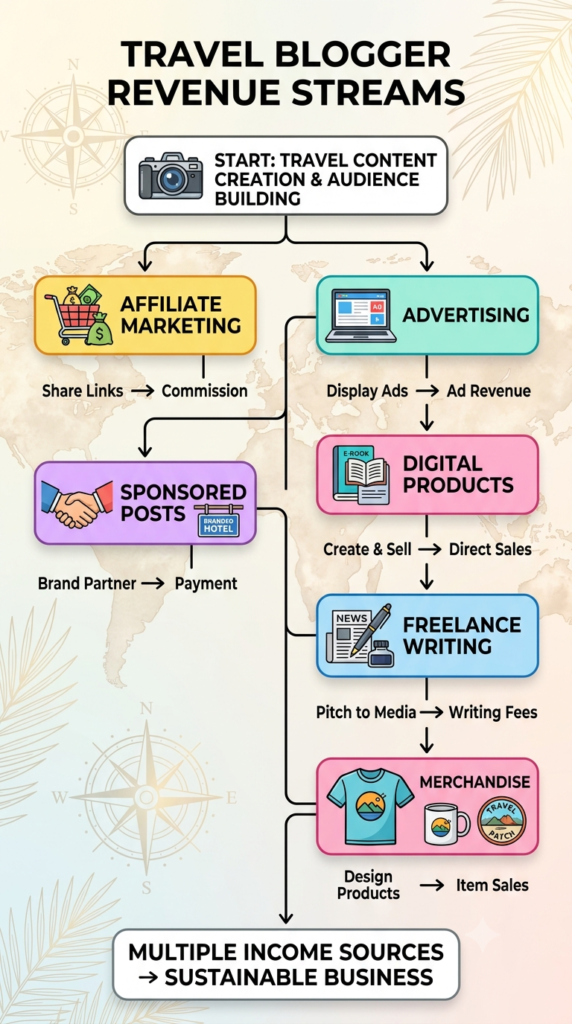
2. Sponsored Content and Brand Partnerships
While affiliate marketing is often about volume, sponsored content is about value. This involves partnering with a brand—a tourism board, hotel chain, or airline—to create promotional content in exchange for payment .
Unlike affiliate marketing, sponsored posts offer a fixed fee upfront, regardless of how many bookings your article generates . Travel bloggers can charge anywhere from $250 to $3,000 for a single sponsored article . For top-tier bloggers with massive engaged audiences, these partnerships can be much more lucrative.
Sponsored content is not just about a blog post. It often includes a cross-channel package covering Instagram posts, Stories, TikTok videos, and YouTube content. A successful partnership, like one with the Brazil Tourism Board, saw a blogger travel to all 13 World Cup cities, creating a massive campaign that built his brand’s reputation .
3. Display Advertising: The Passive Income Stream
If affiliate marketing is about action, display advertising is about volume. This involves selling ad space on your website. You earn money based on ad impressions (how many times an ad is viewed) or clicks .
Popular ad networks range from Google AdSense, which is accessible for newer blogs, to premium networks like Mediavine, which often demand higher traffic but offer better payouts . For a high-traffic blog, this can be a significant revenue stream.
However, there’s a fine line between monetization and a poor user experience. One blogger with around 700,000 monthly readers intentionally limits ads because he knows the “last thing travelers want is to go to a travel blog only to be bombarded with ads” . His goal is for travelers to think of his blog as a genuinely useful resource, not a billboard.
4. Selling Digital Products and Services
One of the most powerful moves a travel blogger can make is to stop trading time for money and start creating products. Selling digital products provides a direct, high-margin income stream.
This can include :
-
E-books and Travel Guides: In-depth guides to a specific destination or topic (like “How to Backpack through Europe on $50 a Day”).
-
Online Courses: Teaching others how to start a blog, take better travel photos, or plan a trip.
-
Photography Presets: For Lightroom, which help others edit their photos.
-
Checklists and Printable: Like a printable packing list or a trip-planning workbook.
For example, one blogger reported earning over $1,000 from digital product sales in a single month . Another found success by creating an SEO-free blog based entirely on his real-world travel experience, which then generated a dedicated audience willing to purchase his services . Beyond products, many travel bloggers offer services like consulting and trip planning, leveraging their expertise to help others create their own adventures .
5. Freelance Writing and Photography
It’s important to remember that not all travel writing is for your own blog. Many travel bloggers use their platform as a portfolio to get hired as a “travel writer for hire.” This can take two main paths:
-
Writing for Other Companies: This is the most traditional and stable option. Travel companies pay a salary for you to manage their blog and create content for their brand . In the US, the average salary for a travel writer is around $66,000 per year .
-
Freelance Work: You are hired on a project-by-project basis to write for magazines, websites, and other publications . Top freelancers on platforms like Upwork can charge rates from $20 to over $125 an hour .
This is a great way to diversify income, build a network, and see what other parts of the industry are like.
6. Merchandise and Memberships
For bloggers who have built a strong, loyal community, there are other interesting avenues.
Selling Merchandise: You can sell travel-related merchandise like backpacks, water bottles, or t-shirts with your logo . Using a print-on-demand service like Printful or Printify minimizes risk because you don’t hold any inventory.
Memberships and Patreon: This is about creating a subscription model for your most dedicated followers. Platforms like Patreon allow bloggers to offer exclusive content—like behind-the-scenes videos, private live streams, or early access to articles—in exchange for a monthly fee . This creates a more stable, recurring income.
Real-World Success Stories
To understand how these strategies work in practice, let’s look at a few examples from successful travel bloggers:
-
Danny (Danny-CPH.com): This UK-born blogger based in Copenhagen earns between $6,000 and $9,000 per month from his blog about Northern Europe . He succeeded by combining his background as a content writer with a commitment to creating authentic, “real experience” content. His focus is on building an “ecosystem of interlinked content” and using AI tools like Travel payouts Drive to convert traffic into bookings automatically .
-
Bob (GoToTravel.tw): Bob specializes in travel to Japan. After a devastating traffic loss during the pandemic, he rebuilt his blog to attract around 700,000 monthly readers and now earns an average of $6,700 per month . His strategy is simple: put the reader first. He prioritizes an honest, non-intrusive user experience, avoiding pop-up ads. He uses affiliate platforms like Travel payouts to automatically generate relevant deals without cluttering his site .
-
Marek (Indie Traveler): Marek’s 14-year journey shows the power of the “by travelers, for travelers” principle . His blogs, which include niche sites like Off Path Portugal, are completely SEO-free and based on first-hand experience. This authentic approach has built a readership that trusts him, allowing him to monetize effectively with affiliate links and display ads. In a single month, he earned up to $10,000 across his projects using automated tools to place targeted offers for high-intent travelers .

The Key to It All: Authenticity and Trust
Every successful blogger interviewed for this analysis repeats one key theme: authenticity is the foundation of their monetization success . You can’t fake it. In 2026, readers are smart and can spot a disingenuous post.
Creating honest, trustworthy content is the single most important factor in building a sustainable income. When you build that foundation of trust, readers are far more likely to book through your affiliate links, buy your products, and become lifelong fans .
Conclusion
Monetizing a travel blog in 2026 is not about a single “get rich quick” strategy. It’s about building a business. Successful bloggers are entrepreneurs who happen to be passionate about travel. They combine authentic, high-quality content with a diversified income strategy that includes affiliate marketing, sponsored content, and digital products.
The journey takes time, commitment, and hard work. It can take a year or more to see your first significant commissions . But for those who stick with it and treat their passion like a business, travel blogging can become more than a hobby—it can become a fulfilling and financially rewarding career.